
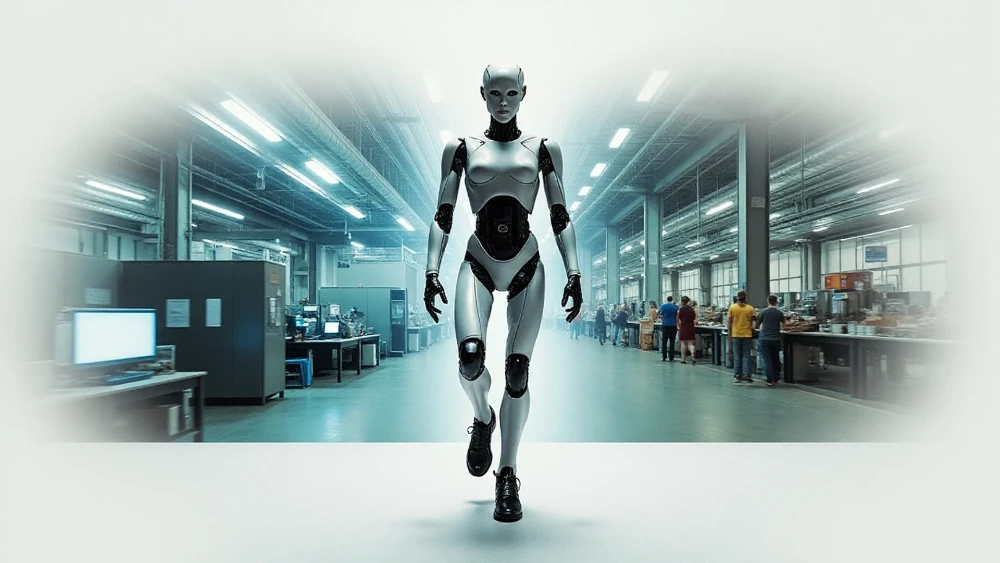
For decades, humanoid robots lived in the easiest place to be extraordinary: the demonstration. They walked across stages, carried boxes in carefully prepared rooms, recovered from a shove, danced for cameras, and occasionally made the internet wonder whether science fiction had quietly arrived. But a demonstration is not a job. A job has eight-hour shifts, unpredictable objects, tired coworkers, maintenance schedules, safety rules, deadlines, and thousands of chances for something to go wrong. That is why the most important humanoid robot story in 2026 is not that the machines look more human. It is that some of them are beginning to leave the lab.
The Demo Was the Easy Part
Making a humanoid robot perform one impressive task is difficult. Making it perform useful work repeatedly, safely, cheaply, and without a team of engineers hovering nearby is much harder.
That distinction matters because the robotics industry is entering a less glamorous but far more important phase: proving reliability.
The International Federation of Robotics lists humanoids entering real-world testing environments among its major robotics trends for 2026. It also points to the measurements that will matter outside a promotional video: cycle time, energy use, maintenance cost, durability, safety, dexterity, and productivity.
Those are ordinary industrial words. And that is exactly the point.
The moment humanoid robots become boring enough to be measured like forklifts, conveyor systems, and other equipment may be the moment they become genuinely important.
See the International Federation of Robotics’ 2026 robotics trends
The Factory Floor Is Becoming the Test
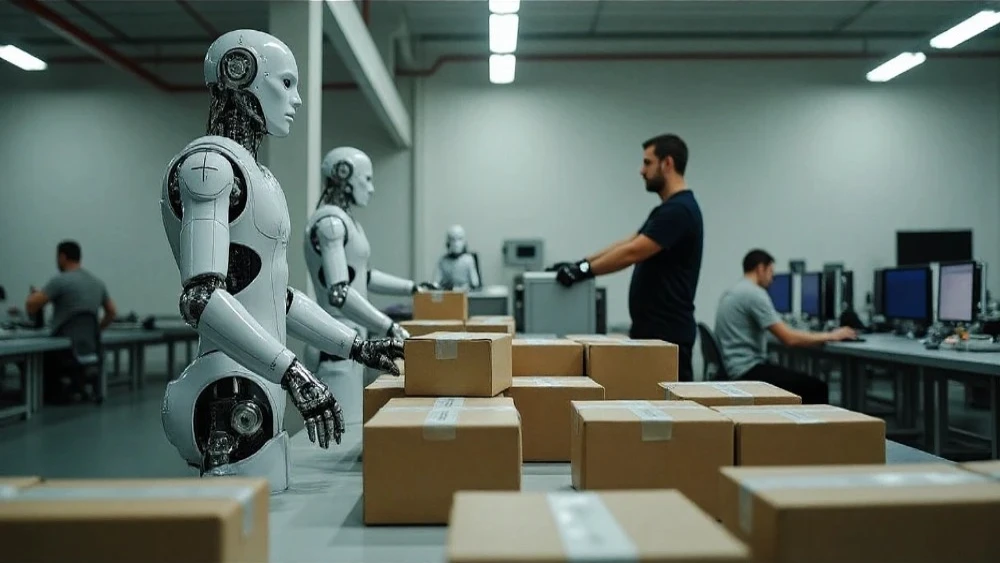
Several companies are now using factories and warehouses as the proving ground.
Figure says its Figure 02 robots contributed to the assembly of 30,000 vehicles during a BMW deployment in 2025, and in 2026 its newer Figure 03 returned to BMW’s Spartanburg plant for a more complex logistics workflow involving sequencing parts and moving a wheeled cart.
Boston Dynamics is taking a similar step with Atlas. In September 2026, the company opened a robotics application center inside Hyundai Motor Group’s Georgia manufacturing campus, where Atlas robots are being trained on real automotive logistics and parts-sequencing work.
Agility Robotics has gone even further into commercial operations. The company says Digit has accumulated more than 65,000 hours of operation and has worked at customer sites including GXO, Schaeffler, Amazon, and Toyota Motor Manufacturing Canada.
These are still early deployments, not evidence that humanoids are ready to flood every workplace. But they are a meaningful change from a robot doing a chore once for a camera.
Figure’s BMW deployment · Boston Dynamics’ Atlas application center
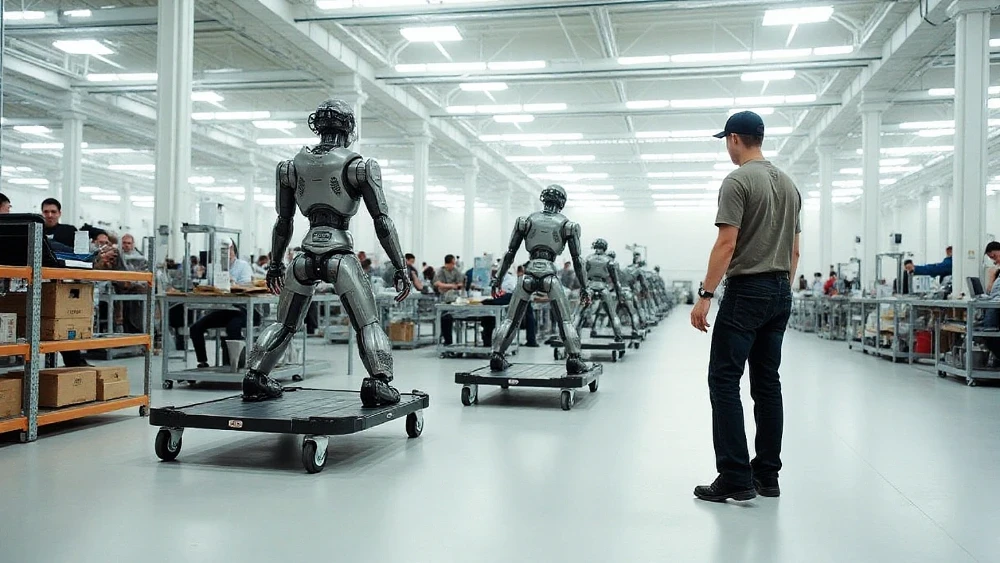
The real breakthrough may not be a robot that looks human. It may be a robot that can survive an ordinary Tuesday at work.
Why Build a Robot Like Us?
A humanoid shape can look unnecessarily complicated. Wheels are efficient. Robot arms already dominate factories. Specialized machines can often perform one task faster and more cheaply than a general-purpose robot ever could.
So why give a machine two legs, two arms, hands, and roughly human proportions?
Because the world was built for us.
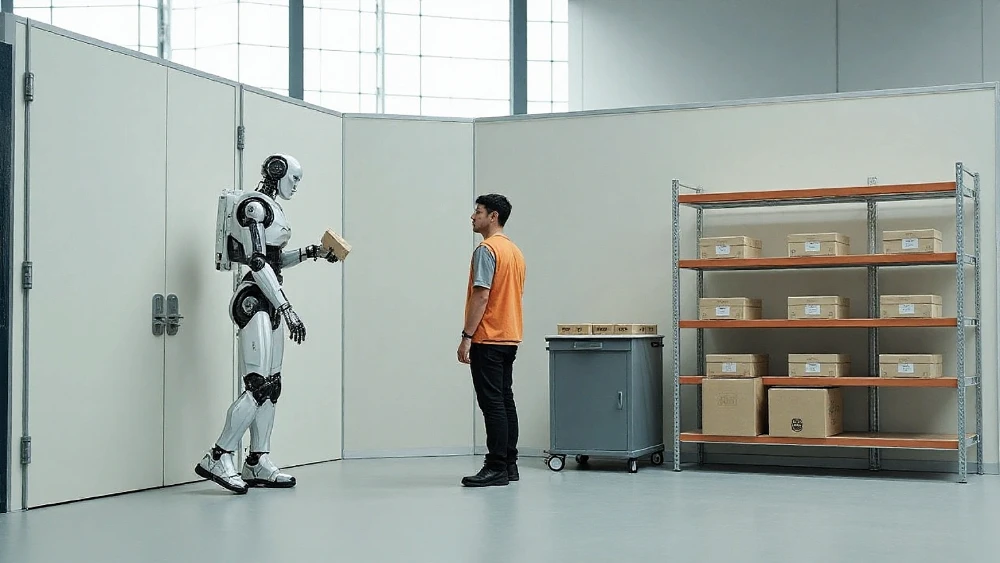
Doors, stairs, shelves, carts, tools, workstations, handles, switches, warehouses, and factories were designed around the dimensions and movements of the human body. Rebuilding every environment around a new machine is expensive. Building a machine that can enter the environment already there is a different strategy.
That does not mean every future robot needs legs. It means the humanoid form has a practical argument beyond looking futuristic: one machine could potentially move through human spaces and learn multiple jobs without requiring the entire workplace to be redesigned around it.
The Brain Is Catching Up With the Body
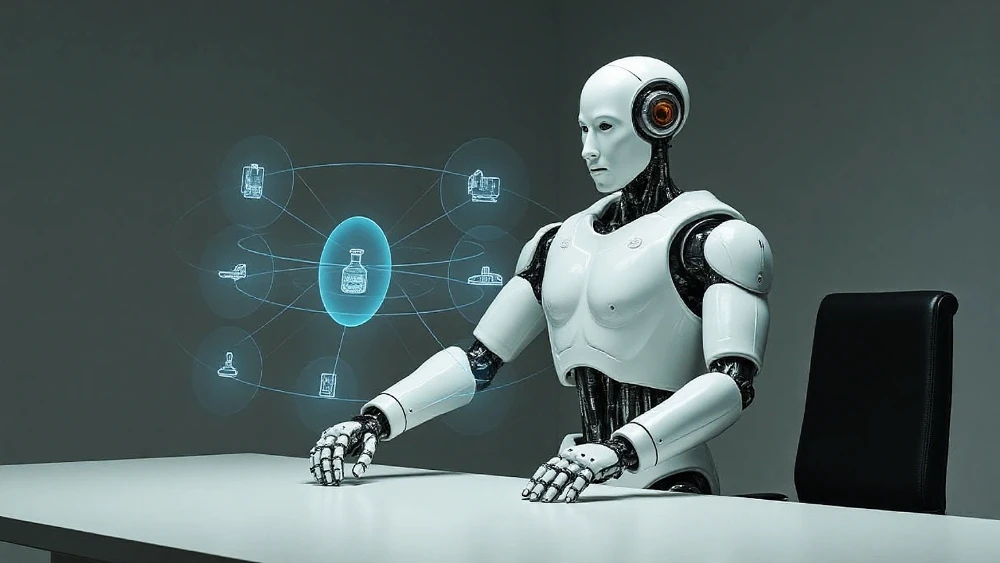
Mechanical engineering solved only part of the problem. A useful general-purpose robot also needs to understand what it sees, decide what to do, coordinate its body, adapt when something moves, and recover when reality refuses to match the training environment.
That is where modern AI is changing robotics.
Figure’s Helix 02 system, announced in 2026, connects vision, touch, body-position sensing, reasoning, and whole-body control. In one demonstration, the system completed a multi-minute dishwasher task that required walking, manipulating objects, balancing, and continuing without human intervention.
NVIDIA is building a broader physical-AI ecosystem around simulation, world models, and its Isaac GR00T robot models. Its partners include industrial robotics companies and humanoid developers, reflecting a larger shift: robot hardware and AI software are increasingly being developed as parts of the same problem.
The challenge is no longer simply teaching a robot how to move.
It is teaching the machine how to deal with a world that will not hold still for it.
Read about Figure’s Helix 02 · See NVIDIA’s 2026 physical-AI announcements
Then Comes the Question Everyone Is Thinking About: Jobs
Every major wave of automation eventually reaches the same uncomfortable conversation.
What happens to the people doing the work now?
The simplest answer is also the least satisfying: nobody knows exactly.
Robotics companies often frame humanoids as tools for labor shortages, repetitive work, ergonomically difficult jobs, and tasks people do not want to perform. Those uses are real possibilities. So is displacement. A machine capable of moving between multiple human-designed tasks changes the economics of automation in a way that a single fixed robot arm does not.
Recent research also shows why headlines can be misleading. Anthropic’s September 2026 analysis found that existing robots can technically perform a large share of physical tasks in limited settings, but it also found that robots remain substantially more expensive than human labor. Being physically capable of a task is not the same as being economical, reliable, or practical enough to replace the person doing it.
The likely transition is therefore not one clean moment when “robots take the jobs.” Different tasks, workplaces, industries, and regions will automate at different speeds. Some jobs may shrink. Some may change. Some workers may supervise machines that perform the most repetitive portions of their jobs. New maintenance, fleet-management, safety, integration, and robotics roles may grow around them.
The important question is not whether work changes. Automation has been changing work for centuries.
The question is who benefits from the productivity when it does.
Safety Gets Harder When the Robot Can Improvise
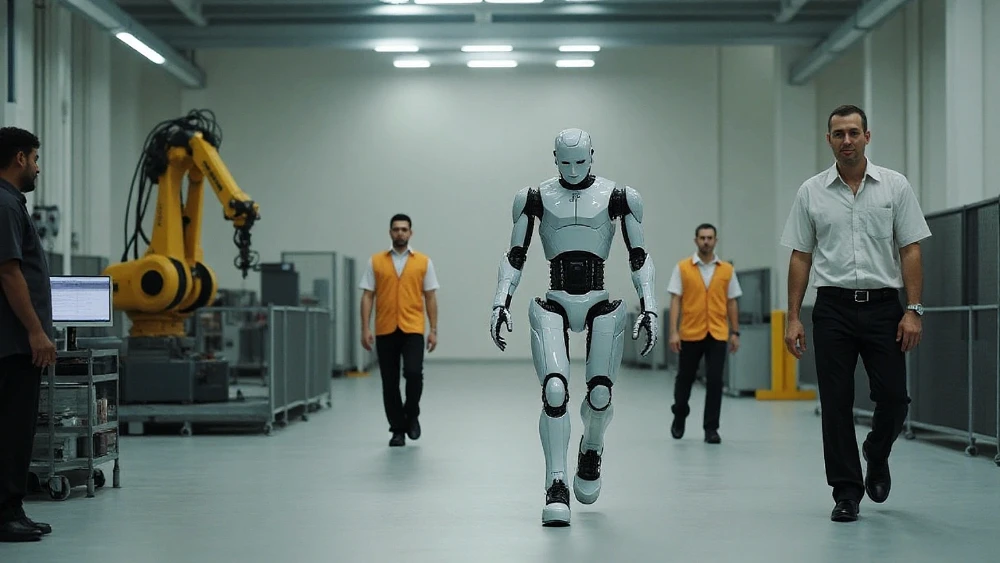
A traditional industrial robot is often separated from people by cages, barriers, carefully defined work zones, and predictable programming.
A general-purpose humanoid is supposed to do almost the opposite. Its value comes from moving through spaces built for people, adapting to changing conditions, and potentially working close to human coworkers.
That makes safety a software problem, a mechanical problem, and an organizational problem at the same time.
Agility’s newly announced Digit 5 is explicitly being engineered for work in close proximity to people without the physical barriers associated with traditional automation. The International Federation of Robotics, meanwhile, identifies safety, cybersecurity, validation, and human oversight as increasingly important as AI gives robots more autonomy.
A robot that can reason about its next action is more flexible than a machine following one rigid path. It also creates more possible actions that must be tested.
The smarter the machine becomes, the more seriously we have to think about what happens when it is wrong.
Do Not Confuse Momentum With Arrival
There is a strange thing about emerging technology: once progress becomes visible, the future can suddenly feel inevitable.
Humanoid robotics has momentum. It does not yet have certainty.
Gartner predicted in January 2026 that fewer than 20 companies would reach production-stage humanoid deployments in manufacturing and supply-chain use cases by 2028, with most deployments remaining in controlled environments during that period.
That is a useful counterweight to the spectacular videos.
Robots still have to become affordable. They need dependable batteries and hardware. Hands must survive repeated manipulation. Software must handle edge cases. Repairs must be practical. Companies need infrastructure and trained staff. Safety systems must work outside the laboratory.
And in many jobs, a specialized machine, conventional automation, or a human worker may continue to make more economic sense.
The humanoid future may be coming.
That does not mean it arrives everywhere at once.
The Interesting Part Starts When We Stop Being Impressed
A robot doing a backflip is memorable.
A robot moving the same container for the ten-thousandth time without hurting anyone, breaking down, getting confused, or requiring an engineer to rescue it is much less exciting to watch.
It may also matter much more.
The next chapter of humanoid robotics will be written in failure rates, maintenance logs, safety records, operating costs, worker experiences, and whether companies discover enough useful tasks to justify the machines.
That is what makes this moment different from earlier waves of humanoid hype. The technology does not have to become a perfect mechanical person to change the workplace. It only has to become useful enough, reliable enough, and inexpensive enough for particular jobs.
And if that happens, the biggest change may arrive quietly.
Not with a robot walking onto a stage.
But with one clocking in.
Humanoid robotics is developing quickly. Deployment figures, capabilities, commercial timelines, and company plans in this article reflect publicly available information as of September 30, 2026 and may change as systems move from testing into production.
← Back to Articles