
There was a time when getting somewhere meant studying a map, writing a letter meant finding the words, and solving a problem often meant sitting with uncertainty. Today, technology can do all three before we have fully thought them through. This is an extraordinary achievement. It also presents a surprisingly human dilemma: the easier a task becomes to outsource, the less often we may practice doing it ourselves. The question is not whether convenience is good. It is whether we are choosing what to delegate—or slowly giving up the choice.
When an Answer Arrives Before the Question Is Finished
You reach for your phone to find a nearby address. An app chooses the route, estimates the arrival, warns about traffic, and tells you where to turn. Later, another app finishes your sentence. A digital assistant summarizes a document you never read in full. None of this is inherently bad. Often, it is genuinely useful.
But the pattern raises a subtler question. When the fastest way to accomplish something becomes the only way we regularly do it, are we still exercising the judgment and know-how behind the task? We can gain convenience and, at the same time, lose opportunities to practice.
This is not a call to abandon useful tools. It is a question about the difference between using assistance and needing assistance.

The GPS Effect: When the Route Replaces the Map
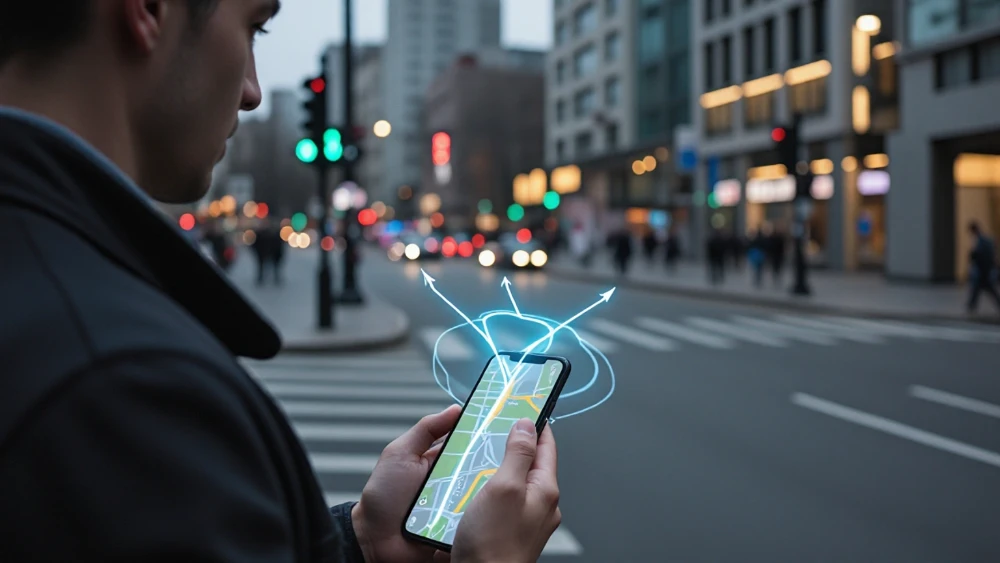
Navigation is a useful example because the trade-off is easy to recognize. Turn-by-turn directions reduce stress in unfamiliar places. They can also encourage us to follow instructions rather than notice intersections, landmarks, and how the streets connect.
A 2020 Scientific Reports study of 50 regular drivers found that greater lifetime GPS experience was associated with poorer spatial memory during self-guided navigation. A small follow-up group of 13 participants suggested a similar pattern over time. The authors did not establish that every GPS user loses navigational skill.
And the research is not unanimous. A 2024 study of 822 U.S. participants found no significant association between self-reported GPS reliance and wayfinding performance. Another 2024 study found associations between reported GPS dependence and poorer navigation performance. These differing results show why the sensible conclusion is not “GPS ruins our brains.” It is that how we use navigation tools may matter.
Read the 2020 spatial-memory study · Compare the 2024 findings
Saving time is useful. Keeping the ability to choose, question, and understand is freedom.
The New Outsourcing: Thinking With AI—or Letting It Think for Us?
Tools have always extended human ability. Calculators let us spend less time on arithmetic; spellcheck catches mistakes; search engines make information easier to find. Generative AI adds a new layer: it can draft, reason through possibilities, organize research, and present polished answers that feel complete.
In a 2025 CHI study, researchers surveyed 319 knowledge workers about 936 real examples of generative-AI use. Higher confidence in AI was associated with less self-reported critical-thinking effort, while greater confidence in one’s own ability was associated with more. The researchers also found a shift toward checking, integrating, and supervising AI-produced work.
That is an important distinction: the study did not prove that AI permanently lowers intelligence or that all users become less thoughtful. It suggests that as assistance grows more capable, our effort may move to different parts of the process—or disappear if we accept answers without examination.
The Subtle Difference Between Help and Dependence
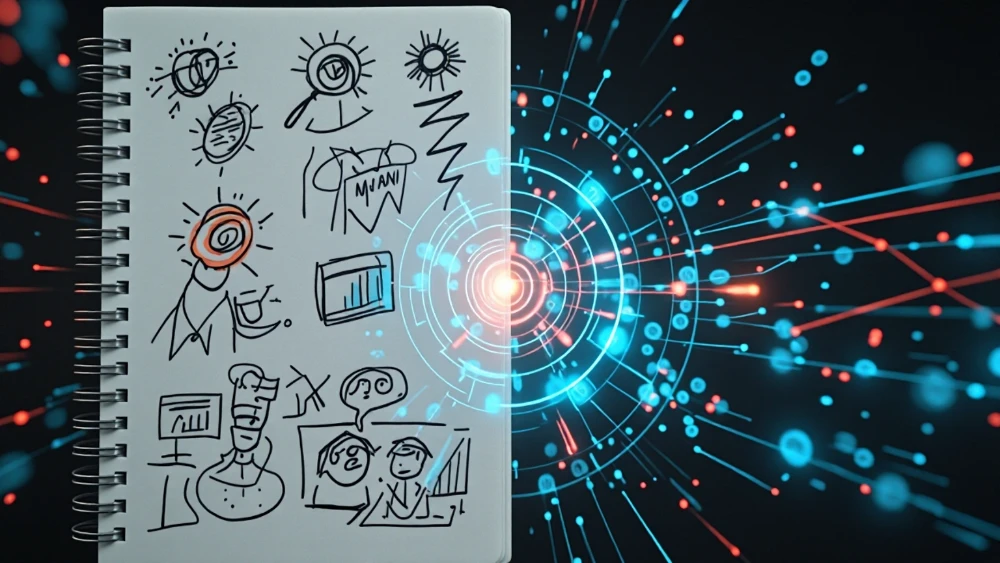
Consider two people using the same writing assistant. One uses it to challenge a first draft, suggest alternatives, and notice weak arguments. The other accepts the first polished response without understanding or checking it. Both saved time. Only one clearly stayed involved in the work.
The same contrast appears in coding, translation, budgeting, and creative production. A tool can act as a tutor, collaborator, or accessibility aid. It can also become a substitute for skills we would otherwise develop. What makes the difference is the relationship between the person, the task, and the tool—not the mere presence of software.
For people with disabilities, limited time, or other barriers, automation can increase independence rather than diminish it. Treating every form of assistance as a weakness would miss one of technology’s most valuable contributions.
When the Automated Suggestion Feels Like the Correct One
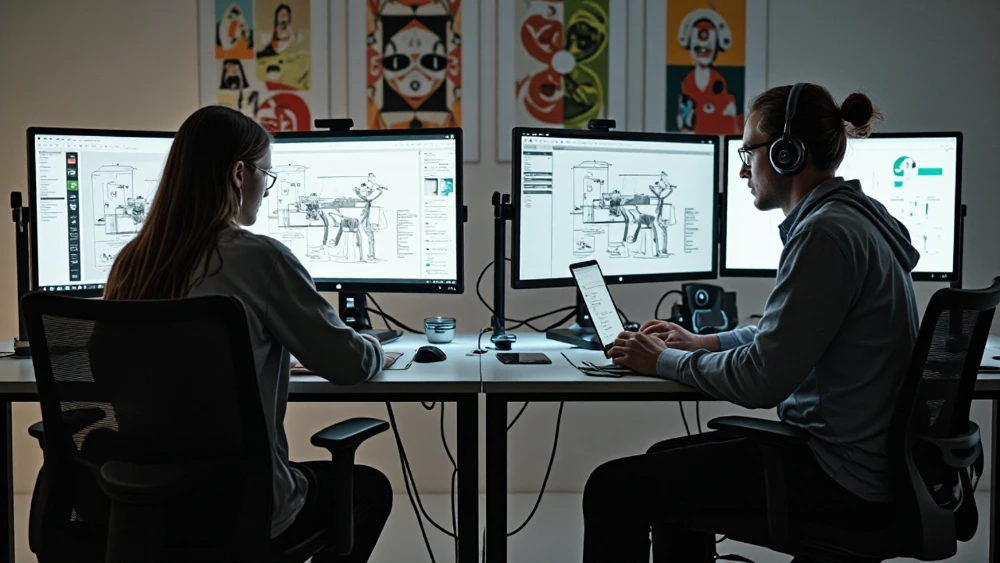
Convenience also changes how decisions feel. An automated recommendation can appear impartial because it arrives as a ranking, score, or preselected option. But the system may be wrong, incomplete, or optimized for goals that do not match ours.
Researchers call one risk automation bias: people may lean too heavily on a system’s advice and overlook contradictory information. A 2024 review examined that risk in clinical AI decision support, where the consequences of uncritical trust can be especially serious.
For ordinary users, the lesson is simpler: an app choosing something for us does not make that choice our preference. Recommendations can narrow options before we even notice there were alternatives.
The Workplace Trade-Off: Faster Output, Different Skills
At work, the story is larger than individual habits. Employers may ask people to use AI to complete tasks faster, while workers must still understand the results, catch errors, and handle unusual cases the software cannot resolve.
A June 2026 OECD policy brief argues that human skills remain central to whether AI adoption succeeds. Related OECD analysis notes that AI can automate tasks, create new kinds of work, and improve productivity at the same time. Those effects differ by occupation and by the kinds of tasks involved.
An emerging concern is not that everyone will forget everything, but that some roles may become narrower while others require deeper judgment. Training, opportunities to practice, and retaining meaningful human control all matter.

A Better Question Than “Should We Stop Automating?”
The practical choice is rarely all-or-nothing. We can use GPS and still occasionally plan a familiar route ourselves. We can ask AI for a summary and still read the original document when the details matter. We can automate repetitive work while keeping enough understanding to recognize a mistake.
Try asking three questions when a tool offers to do something for you: Do I understand the result? Could I question or correct it? Am I choosing to delegate this—or have I forgotten how to begin without it?
None of these habits requires rejecting technology. They simply protect the role of the human being in the loop.

Keeping Our Independence in an Automated World
There are practical ways to make assistance serve us instead of quietly replacing us. Try a task yourself first when the stakes are low and learning matters. Ask an AI assistant to explain why, not merely produce what. Double-check an important recommendation against primary evidence. Occasionally navigate a familiar neighborhood without turn-by-turn prompts. Teach the next generation how a process works, even if a machine can complete it faster.
Equally important: recognize when automation genuinely increases freedom. Someone using speech-to-text, accessible navigation, or a personal assistant may be able to participate in activities otherwise out of reach. The goal is not to glorify difficulty or insist everyone do every task the hard way. It is to preserve choice, skill, and accountability wherever those still matter.
The Freedom to Do It Yourself
The most consequential shift may not arrive with a dramatic announcement. It may arrive in thousands of tiny moments when “I'll figure it out” becomes “The system will handle it.” Sometimes that is progress. Sometimes it is a habit worth questioning.
Technology should make people more capable, not merely more comfortable. If we use intelligent tools to explore, practice, create, and understand, convenience can expand our independence. If we stop questioning their answers or lose confidence in our own judgment, we risk exchanging one kind of freedom for another.
The real test of a useful tool is not only what it can do for us—but what it still allows us to do for ourselves.
Editorial analysis reflects research available as of October 24, 2026. Studies differ in design and findings, and associations do not by themselves prove causation. This article is educational commentary.
← Back to Articles